the cooperation layer

A learned mechanism that helps multiple independent entities act like a coherent team.

HUMANS seesfaces, body language, what's right in front missesanything outside their focus at that moment ROBOTS senseswhatever its sensors are directly pointed at misseseverything outside that field, every time DRONES seeswide patterns from above, invisible from the ground missesground level detail and anything indoors SENSORS measuresone variable, continuously, without fatigue missesevery other variable in the environment SOFTWARE AGENTS processesany data it receives, instantly missesevents and context outside its data stream WEARABLES trackspulse, movement, location missesthe situation those readings came from EXTERNAL TOOLS respondsto exactly what it's asked misseseverything it was never asked about

Each entity has only a partial view of the world. Each one has different abilities, limitations, timing, and reliability. The cooperation layer helps produce useful team behavior from those incomplete and changing local views.

The goal is not just to make entities communicate. The goal is to make independent entities become meaningfully aligned in real time, under changing conditions, without hand coding all coordination rules.

the problem

A system can have many capable parts
and still fail as a team.

01 Each part sees only a slice of reality. No single entity has the full picture.
02 The world changes constantly and entities can fail or disappear.
03 Fixed coordination rules do not scale well. No single rule set can cover every situation.
04 Too much information can be as harmful as too little.
05 Locally reasonable actions do not always create globally good behavior.

This problem appears across:

robotics problemeach robot only sees what its sensors directly face solutionfixed sharing protocols, but they break when the team changes emergency response problemresponders act on fragments; no one has the full picture solutionradio chains and command structure that stay slow to adapt when conditions change fast autonomous vehicles problemeach car sees its own sensors; intersections need shared awareness solutioncars broadcast raw data to all nearby, with no filtering of what actually matters military coordination problemunits, drones, and sensors each hold a slice of the battlefield solutionfixed message formats connect units, with no ability to adapt to evolving situations air traffic control problemeach controller manages one sector; handoffs rely on human judgment solutioncollision alerts are reactive and local, with no learning from patterns across the airspace supply chain problemevery node optimizes locally; disruptions cascade across the network solutionstatic schedules between systems and no adaptive coordination when things change space exploration problemcommunication delays make real time guidance from Earth impossible solutionrigid scripts uploaded daily, so units can't adapt to what they encounter

Existing solutions range from hand coded protocols to centralized planners.
The cooperation layer is a different path.

what it does

The cooperation layer helps the team
continuously answer:

three platforms, one clock

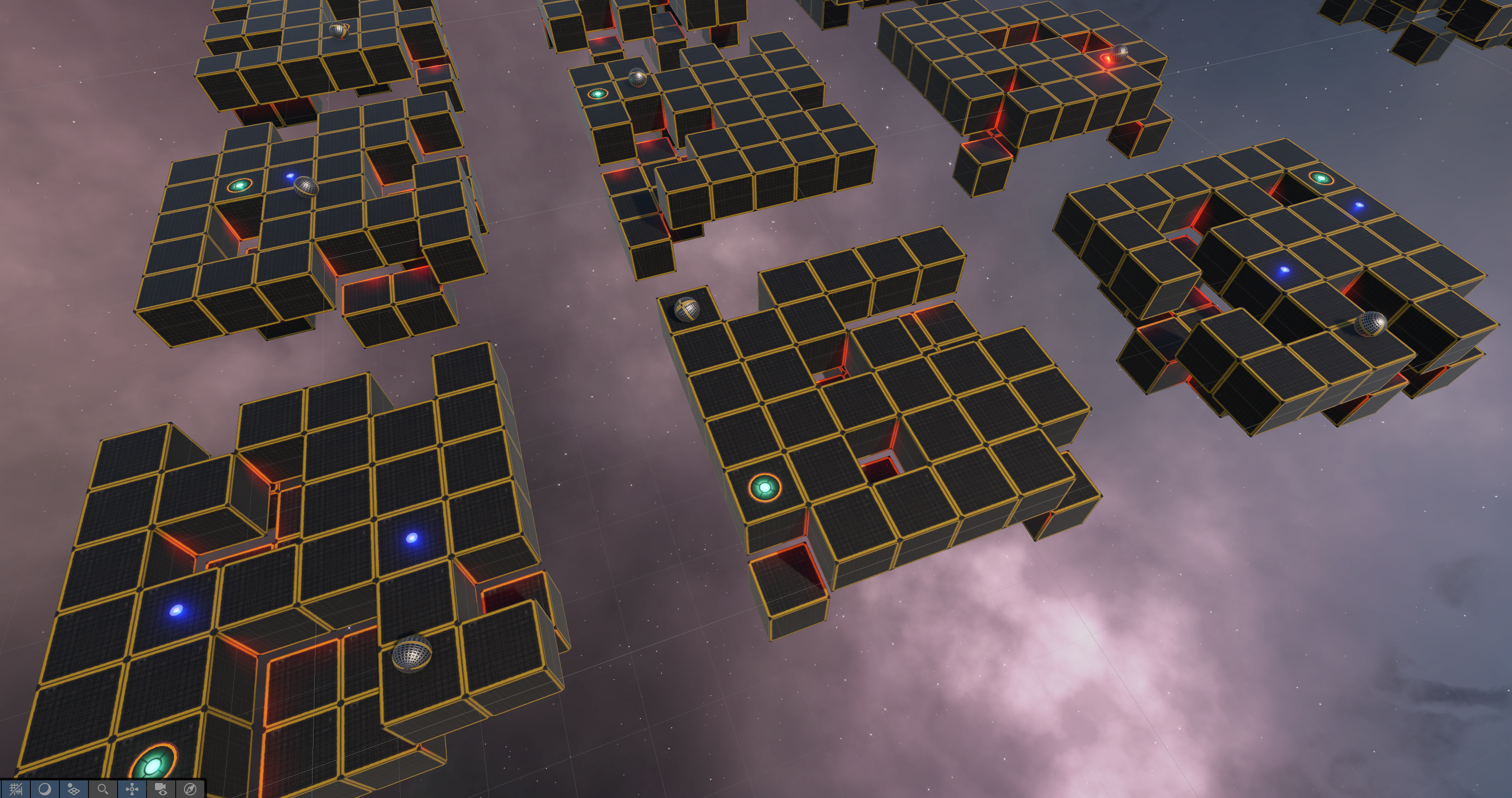
Three small agents stand on three separate platforms. Each has its own button. From far away, the task looks easy: move to the button and press it. But the team does not win when one agent succeeds. It wins only when at least two buttons are pressed at the same time.

near agent is close to its button, but does not know if anyone else is ready
crossing agent is still moving across its platform and needs more time
early agent may press too soon and release before another arrives
team objective cares about overlap in time, not just reaching the buttons

without a cooperation layer

Each agent can learn to reach its own button. That still does not solve the task. One arrives too early. One is still crossing. One has already released. Every action can make sense locally, while the team still fails globally.

with a cooperation layer

Each agent still sees only its own small world. But now, something about the team reaches it.
Not everything. Not raw data.
Just enough to change the next move.
One agent slows down.
Another holds near the button.
Another closes the gap.
For the first time,
their separate movements line up.

without a cooperation layer

? !? ! agent 1 agent 2 agent 3 hold, others moving close the gap press together

The task was not reaching the buttons.

The task was reaching the moment together.

Not centralized control, not hand coded waiting. A learned layer
that turns local policies into coordinated timing.
building rescue

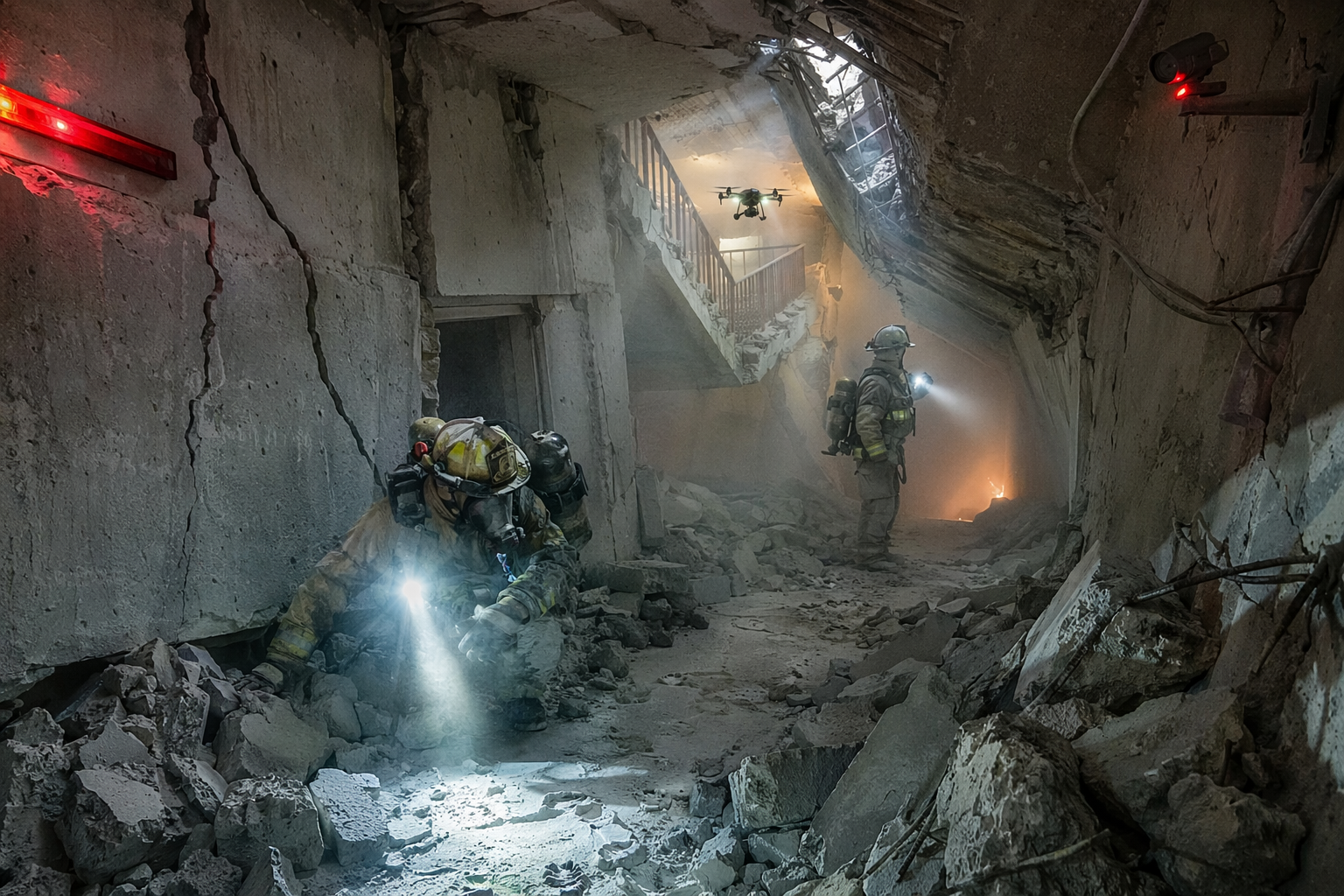
Consider a rescue team entering a partially collapsed building after an earthquake. The team includes human responders, a micro drone, displays on their helmets, thermal cameras, and building sensors.

firefighter sees the hallway ahead
drone sees a blocked stairwell
building system knows where heat is rising
thermal camera catches a shape that might be a survivor

without a cooperation layer

Either every entity broadcasts what it knows and the team drowns in disconnected data, or coordination falls back to slow voice calls and rigid rules that cannot adapt fast enough.

with a cooperation layer

Something different happens. The inside responder gets "hold! heat spike ahead". A second responder gets "left route now safer". The drone gets "recheck room 3". The commander gets "regroup for extraction".

without a cooperation layer

? !? ? ! !? building sensor firefighter commander second responder drone hold! heat spike ahead left route now safer recheck room 3 regroup for extraction

No one received everything.

Everyone received what they needed to act well right now.

Not more data. Better coordinated action from unequal, partial,
and changing local views.

occluded left turn

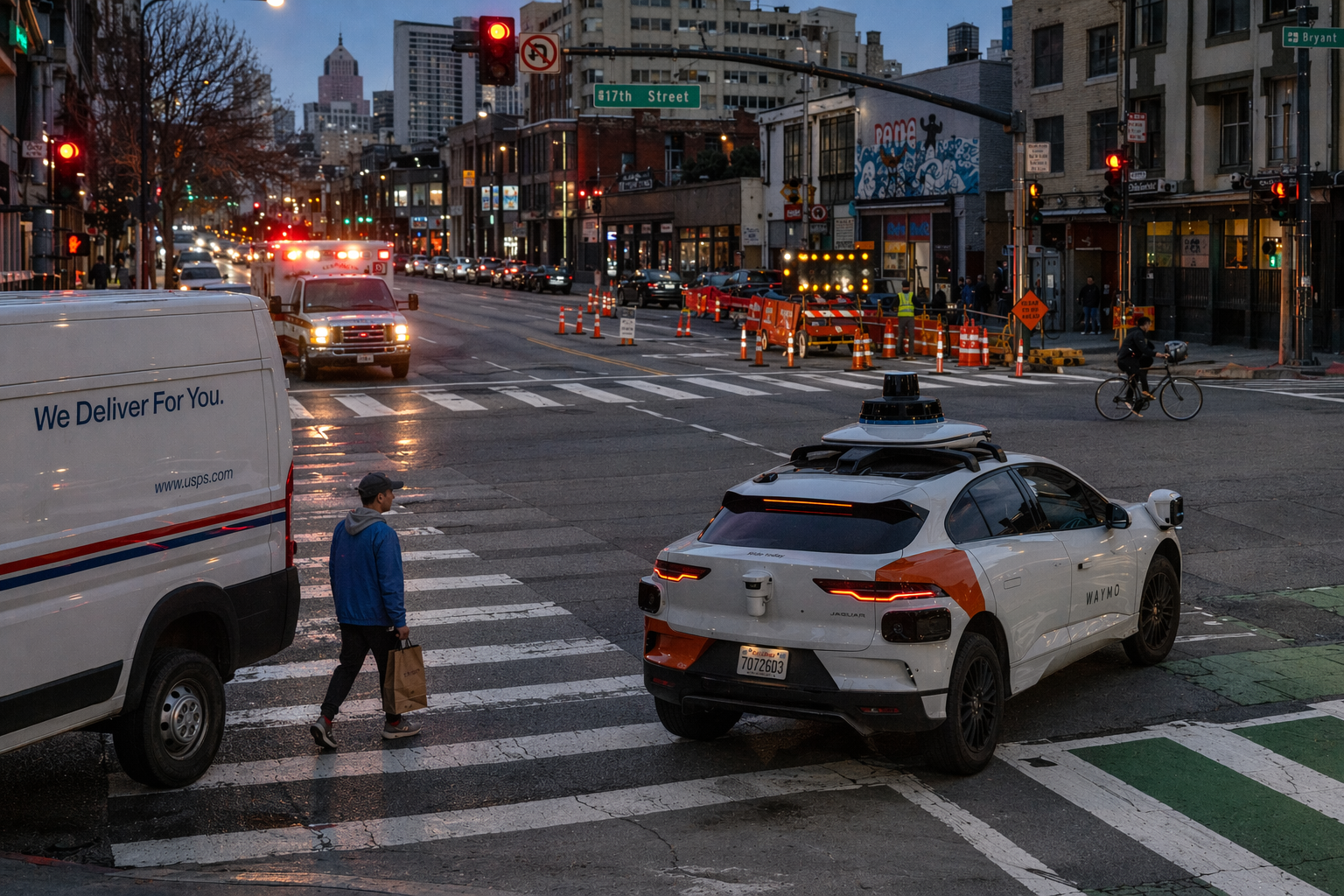
At dusk at a busy city intersection, a robotaxi is waiting to make an unprotected left turn. A delivery van near the corner blocks part of the crosswalk. Just beyond the turn, temporary road work has narrowed a lane and traffic is starting to bunch up. An ambulance is approaching from the right, still partly hidden by buildings and traffic.

robotaxi sees the turn opening, but not the pedestrian behind the van
corner sensor sees a pedestrian beginning to step out from occlusion
roadside system knows the lane beyond the turn is no longer clearing cleanly
ambulance approaches fast from the right, before the turner can fully see it

without a cooperation layer

Either everyone shares raw traffic state and the important fact gets buried, or each actor acts from its own narrow view and the conflict is discovered too late.

with a cooperation layer

Something different happens. The robotaxi gets "hold turn! do not enter yet". The ambulance gets "turning vehicle yielding". The roadside system gets "keep crossing warning active". Nearby vehicles get "prepare to stop".

without a cooperation layer

? !? ! ! ? corner sensor robotaxi roadside system ambulance nearby vehicles hold turn! do not enter yet. keep crossing warning active turning vehicle yielding. prepare to stop.

No single actor had enough to judge the turn cleanly.

Each one got the slice that mattered for the next move.

Not more data. Better coordinated action from unequal, partial,
and changing local views.

icu at 3am

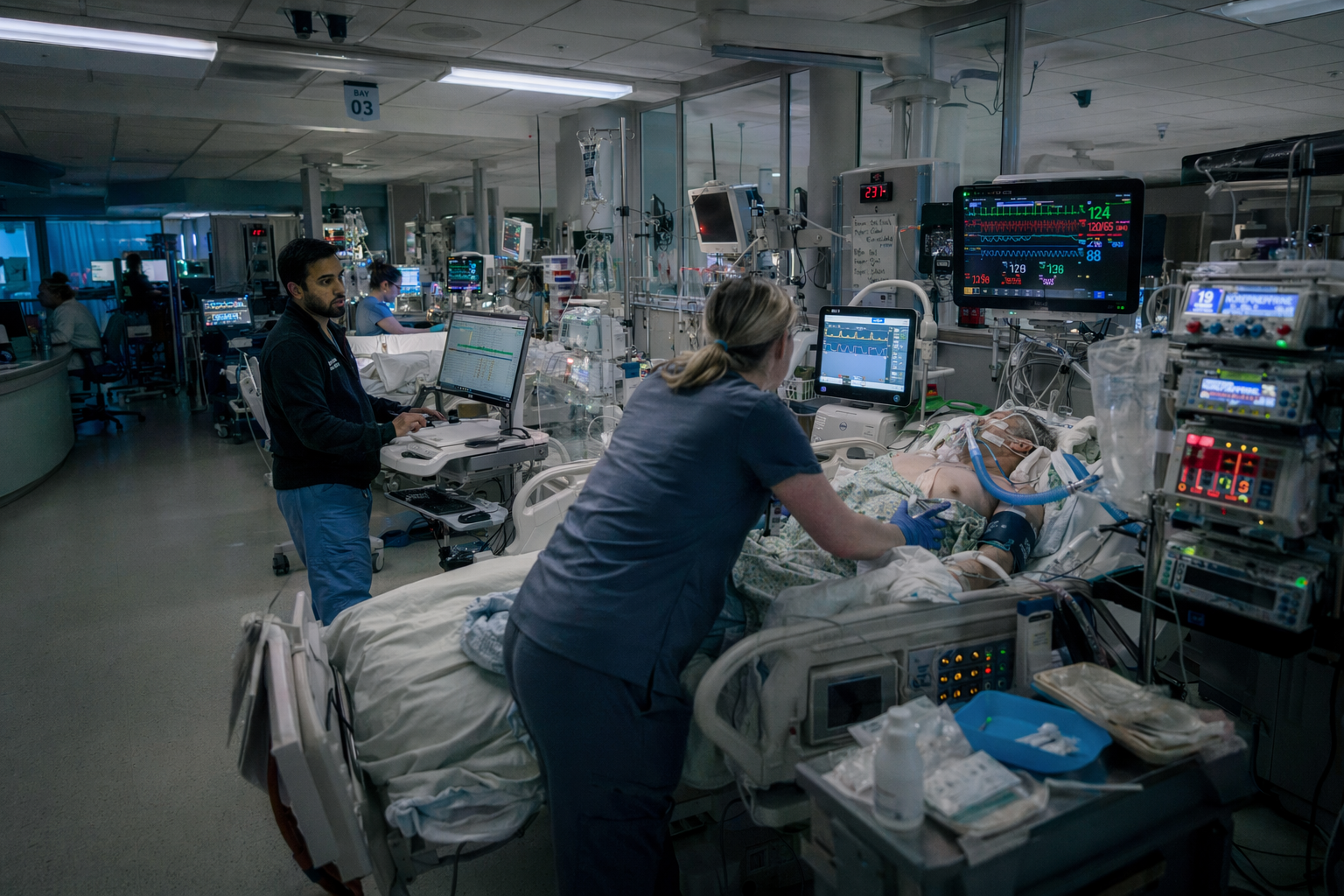
At 3 AM in the ICU, one patient is starting to drift in the wrong direction. The bedside nurse is in the room. The monitor is tracking vital signs. The medication pump shows recent drug changes. A new lab result has arrived. The covering physician is nearby, but not at the bedside yet.

monitor sees blood pressure drifting down and heart rate rising
bedside nurse sees the patient becoming more restless
medication pump knows a blood pressure medication was adjusted recently
lab system shows a new result that is worse than the last one

without a cooperation layer

Either each device and system raises its own alert and the team gets noise from every direction, or the same facts stay separated across screens, notes, and people until someone connects them too late.

with a cooperation layer

Something different happens. The bedside nurse gets "check perfusion and lines now". The covering physician gets "possible early shock pattern, come to room 5!" The pharmacist gets "review recent medication change". The respiratory therapist gets "recheck breathing support".

without a cooperation layer

! ! ! ! ! patient monitor bedside nurse covering physician pharmacist respiratory therapist check perfusion and lines now. review recent medication change. recheck breathing support. possible early shock pattern, come to room 5!

No single signal was enough on its own.

Each role got the part of the pattern that mattered now.

Not more data. Better coordinated action from unequal, partial,
and changing local views.

urban corridor

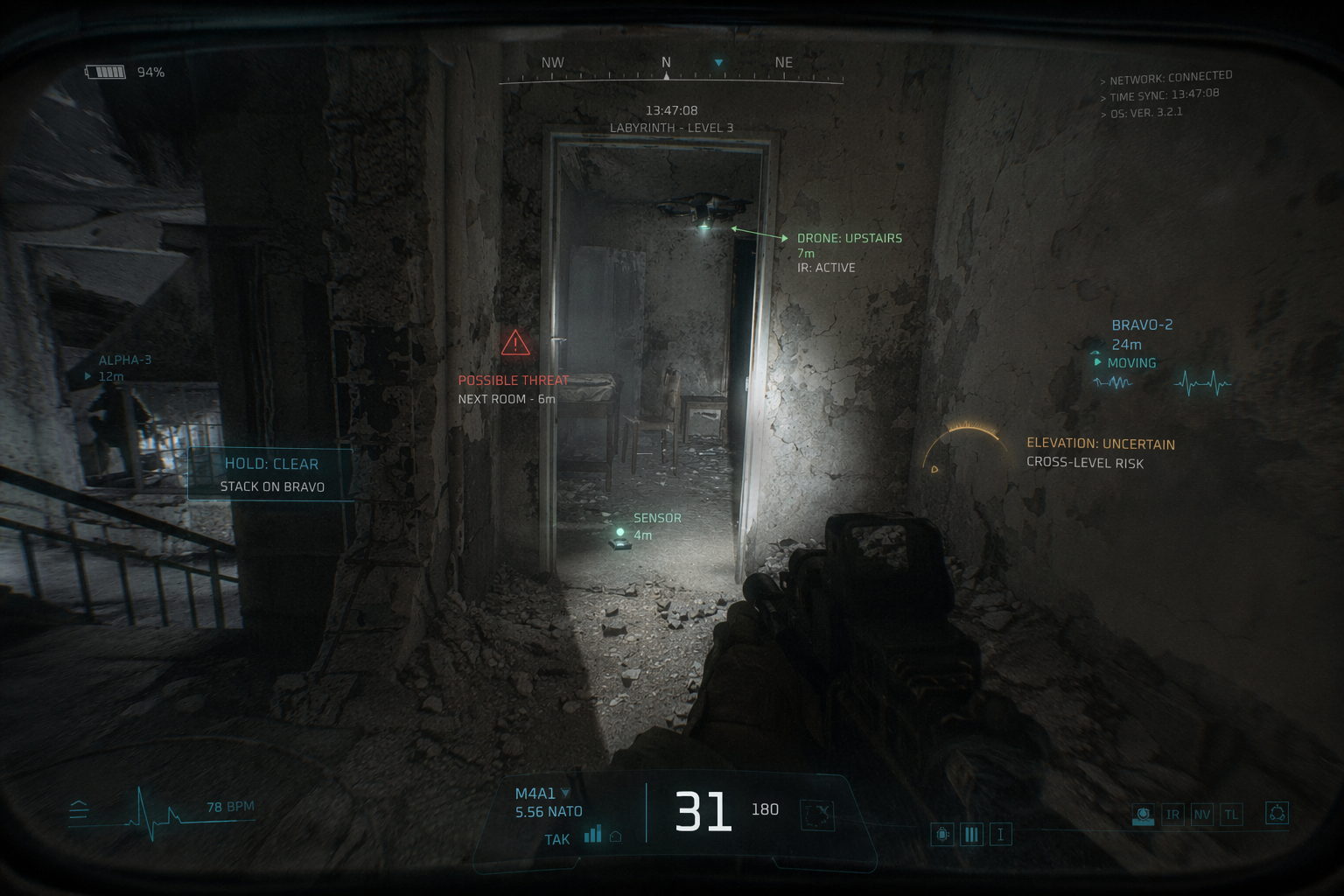
A soldier moves toward a doorway inside a damaged building. He sees only the corridor in front of him. A tossed sensor in the next room picked up movement. A micro drone saw motion above the courtyard. A teammate on another stairwell knows the right side is blocked.

soldier sees the corridor ahead, nothing beyond the doorway
room sensor detected movement in the next room, but not what caused it
micro drone saw motion on a balcony the soldier cannot see
teammate knows the right side is blocked

without a cooperation layer

Either the visor fills with feeds, icons, and warnings and the soldier has to sort them out while moving, or each node keeps its own fragment and the lead moves forward without what the team already knows.

with a cooperation layer

Something different happens. The soldier gets "hold! movement left room". The teammate gets "cover right". The drone gets "check balcony again". The squad leader gets "hold entry".

without a cooperation layer

? !? ? ! !? room sensor soldier micro drone teammate squad leader hold! movement left room cover right check balcony again hold entry

The soldier still sees one corridor.

Each role got the one cue that changed its next move.

Not more data. Better coordinated action from unequal, partial,
and changing local views.

summer evening ramp

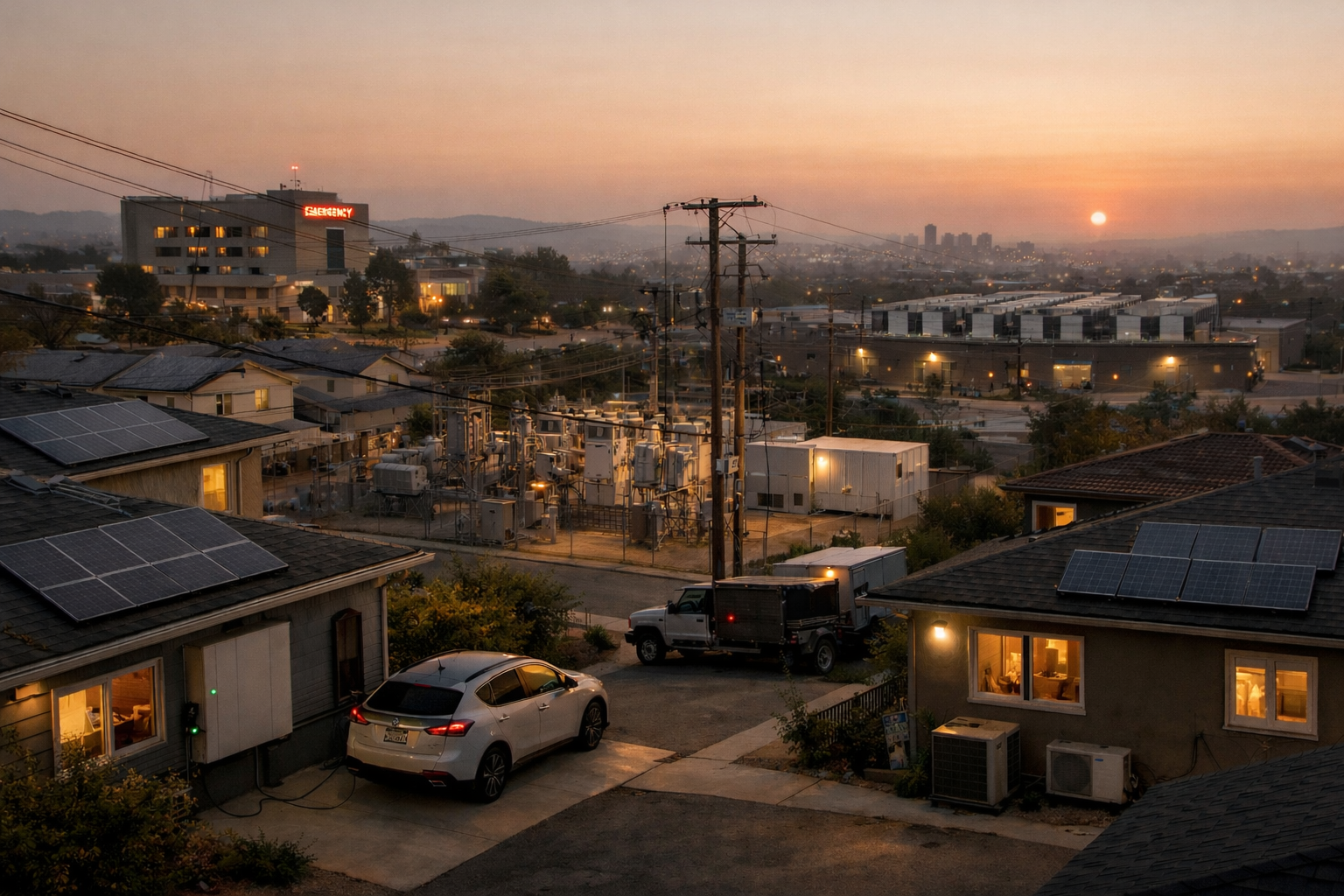
At the end of a hot day, the neighborhood is entering the evening ramp. Rooftop solar is fading. Air conditioners are still running. EVs are plugging in after work. A feeder is getting close to its limit. There is help nearby: batteries can discharge, a data center can shift some work, and homes can trim a little. But a hospital microgrid must protect its backup reserve.

utility sees the feeder getting tight, but not every private constraint behind it
battery fleet knows how much it can help now, and how much it should save for later
EV fleet knows which cars can wait and which must be ready by morning
data center knows which compute can move, and which cannot

without a cooperation layer

Either the utility sends a broad demand response request and every resource guesses how hard to help, or each actor follows its own local rule: one battery saves energy for later, another discharges too early, EV charging continues on the hot part of the feeder, and flexible compute stays unused.

with a cooperation layer

Something different happens. The battery fleet gets "help now, but keep a second ramp reserve". The EV fleet gets "pause charging here if it can wait". The data center gets "shift batch work for 25 minutes". The hospital gets "protect backup; trim noncritical load only".

without a cooperation layer

? !? ! ? !? utility battery fleet data center hospital microgrid EV fleet help now, but keep a second ramp reserve shift batch work for 25 minutes protect backup; trim noncritical load only pause charging here if it can wait

The help was already in the neighborhood.

It just had to arrive in the right shape, at the right time.

Not one brain controlling the grid. Coordinated flexibility from unequal, partial,
and changing local views.

Three small agents on separate platforms with individual buttons; the team wins only when at least two presses overlap in time. Local skill alone does not produce that moment. Occluded left turn at dusk: robotaxi waiting to turn, delivery van blocking the crosswalk, road work beyond the turn, ambulance approaching; each actor holds a different piece of whether the turn is safe to enter now Rescue team entering a collapsed building; each entity sees a different slice of the scene ICU at night: nurse in the room with a monitor and pumps; physician nearby; each person and system holds a different piece of the same situation. Soldier at a doorway in a damaged building. Corridor ahead only; a room sensor, micro drone, and teammate each know something he cannot see from where he stands. Summer evening ramp on a neighborhood feeder: fading solar, air conditioning still up, EVs arriving home, a feeder nearing its limit, scattered flexibility from batteries and shiftable compute, and a hospital microgrid that must keep backup reserve. Each actor holds a different piece of the same ramp.

what it is not

The cooperation layer is not:

It is meant to learn what coordination should emerge,
not just transmit information blindly.

core properties

A strong cooperation layer should support:

Relevance

Only useful information should flow where it is needed.

Timing

Information should matter at the right moment, not too early and not too late.

Priority

The system should help determine what matters now.

Role awareness

Different entities should receive different guidance depending on role, state, and capability.

Robustness

If one node disappears, the team should reorganize gracefully.

Global coherence

The outcome should be useful at the team level, not only locally.

Adaptation

The same layer should handle changing environments without manually rewriting coordination rules.

Learned

The coordination rules are not hand coded. They are discovered through training.

The cooperation layer is a learned mechanism
for producing intelligence at the team level
from distributed, incomplete,
and changing local perspectives.

← auryn labs